
Finding Pain and Purpose in Perimenopause
March 15, 2026
Almost two decades ago, I was working in my dream job. Or at least, on paper I was doing everything I’d ever wanted from a career – traveling, public speaking, writing, researching, and influencing health policy – but the toxic nature of the work environment was the worst of any I experienced up until that time or since. All the signs of a bad situation were there: managers screaming at employees, all kinds of dishonesty and blaming behind closed doors, and a boss who openly disparaged other subordinates while constantly seeking praise. Yet in the midst of all that, I idolized this person – an accomplished woman I saw as knowledgeable, worldly, and powerful. So my psyche kept bending itself into a pretzel to defend her horrendous behavior.
In the moments when I felt the greatest threat, for example when I was called into a meeting with three supervisors and no Human Resources representative (despite my request for one) and each took turns verbally assaulting me for not “falling in line” with some deeply unethical practices, my body knew something was wrong. Even though my mind had been primed since childhood to see myself as a failure, there was a rumbling deep inside that alerted me to a violation of my boundaries. I often look back and imagine walking out right then. At the time, I didn’t yet have the language or confidence to do that. It was my dream job after all! I didn’t know it then, but that experience would eventually become one of the most important turning points in how I understand my body, my boundaries and my career.
Inner Identities at War
I’d like to tell you that I learned my lesson and never allowed myself to be manipulated into upholding some narcissist’s self-congratulatory workplace politics again. But the truth is that I seem to have a knack for getting myself into toxic work environments. Taking together my desperation for a strong female role model and frequent chastisement as a young person for emotions that were “out-of-control” and “selfish” it’s no surprise that the combination of a high-performing and unappreciative organizational culture was like catnip to me.
Our bodies hold the key to our truth. If I had been paying attention, there were signs all along that these situations weren’t serving me. I can point to specific memories and remember the symptoms of conflict: the acidity in my stomach, the tightening, like a corset around my ribs, the unrest in my intestines, or the rigidity of muscles in my back and neck. I saw these things as weaknesses to be overcome rather than the warning signs they were. I was not ready to honor and protect the needs of my heart. Not yet.
Looking back, there have been two identities colliding within me for a long time. The child version of me who wants to feel like she matters, she is desperate for a sense of worth. And then the rebellious, strong-willed adult version of me that came about as a coping mechanism just wants the child to shut up and get on with it. The conflict between these characterized my 20s and 30s in work, romance and even in friendship. I got so used to allowing one identity or the other to take the lead that I couldn’t for the life of me figure out a way to feel whole and aligned. Whenever one was in charge, the other would be fighting internally for a chance to voice her disapproval or desire. Without alignment on the inside, I couldn’t express what I really needed or wanted from other people.
Bittersweet Awakening
There’s a thing that started happening to me around the time I entered my 40s. It’s a sort of painful waking up to the games I’ve been part of and their consequences. It came with a building desire for freedom; a longing to live with abandon and stop playing by the rules. But it also brought a vulnerable awareness of all the ways I’ve been lenient with my boundaries and the scars that remain as a result. While this turning point of self-awareness has been uncomfortable, it has also brought a huge sense of relief and clarity. Like I can finally hear my own voice through the din for the first time.
Perhaps predictably, this transition has come alongside the physiological signs of perimenopause, making it difficult to separate the existential questions from awareness that my body is changing. I think it’s important to be honest that this time of life contains both celebration and sorrow. We have to shed the old in order to step into what is new. Alongside the frustration at foolish decisions of my youth is the piercing determination to learn from these and lay out protective ground rules for the future. Coupled with the grief of feeling youth slip like sand between my fingers is a growing sense of wonder about what’s coming next and the incredible resilience of my body and mind. There’s the thrill of knowing that I can claim the main character in this next chapter.
I resent that the recent buzz in the media around perimenopause has resulted in a rhinestone encrusted narrative about the untapped magic of “the change”. It’s like, “Hey! Everyone was doing perimenopause wrong but we figured it out so, yay! Take 2 supplements and wake up looking and feeling as glamorous as J-Lo.” Putting aside the clear money-making goals of this movement, I think this dismisses the very real grief and frustration that comes with coping with a body that is increasingly unrecognizable as we battle brain fog, insomnia, heart palpitations, skin conditions, frozen shoulder, and thermoregulatory challenges – just to name a few of the common symptoms.
But is the “right” way to do perimenopause to desperately cling to the past as long as possible? That temptation is huge because the physical parts feel hard in the moment. It’s easy to miss out on the profound gift of being able to sense what your body needs. There’s nothing like perimenopause to make you realize how much time you’ve wasted worrying about other people’s opinions and how little that’s paid off so far. My intuition feels razor sharp and I’m yearning for a reckoning.
Relishing in the In-Between
Being in perimenopause is like being in Alice in Wonderland. It’s a world of in-betweens that doesn’t align with expectations. While you’re no longer young, you’re also not yet old. It’s like being held in limbo between two acts of a play. It’s tempting to get swallowed up in the story that’s already been told, but the magic is in the discovery of the unknown.
Finally, my warring inner identities have begun to reconcile as they collaborate to bring about the next version of me. There is something to learn both from the girl desperate to be loved and from the woman who wants to appear capable. I used to think that maturity meant gaining the strength to shed the parts of me that don’t belong. Now I see the wisdom in learning to live in harmony across all my inner selves. I believe this is why so many of us end up with multi-pronged careers and side hustles. We start nourishing all of our ambitions equally and appreciate the prismatic interests that arise. It might not fit any traditional notions of career progression, but if the world wasn’t built by or for us why should it be any surprise that our journeys aren’t represented in the standard atlas.
Confronting diagnoses of generalized anxiety disorder and complex PTSD in my late 30s forced me to acknowledge that “feeling different” for all those years was because my nervous system was just a bit more sensitive than other people’s. And trying to fit into contexts that meet the needs of other people was a large part of the suffering I’ve experienced, both emotionally and physically.
A Movement Manifesto
Entering perimenopause has been a bit like being shaken awake during a bad dream. I am systematically questioning everything in order to find out what is real. I take nothing for granted anymore. And my movement practice is more about connecting with my inner knowing that it is about achieving some goal. I move to explore what my body needs and to release the burdens I have been carrying unknowingly in my fibers. I move in community to build vibrant connection and to feed off the energy of others. I move to quiet the noise of my mind and the demands of the world around me in order to access a state of calm.
Because my needs change, so does the movement I choose. Sometimes the movement I crave is calm and gentle, like restorative mat or yoga. Sometimes the movement I crave is vigorous, like a jog or high intensity intervals. Sometimes picking up heavy weights calls me and sometimes the slow, intentional resistance of Pilates equipment springs is just what I need. And then other times movement is a means of accessing nature; feeling the sun on my face and hearing the birds sing.
Even as I am currently studying to become a clinical exercise physiologist, where everything I read includes precise guidelines regarding the exact type and intensity of exercise recommended for various conditions, I remain committed to the belief that movement is so much more than a tool for physical health. When performed with curiosity and openness, movement can be a pathway to profound self-reflection and healing. You can’t measure that, but that doesn’t mean it isn’t real.
Acknowledging Possibilities
I would like to think of perimenopause as a period of definition. I’m like an architect sitting in front of a drafting table. My only constraints are the topography of the land and my imagination. It is a chrysalis of sorts where the final product may look nothing like the creature that entered.
Your career, your relationships, your movement practice. None of these vestiges of the former you have to appear in the future you. And the fundamental challenge here is that the language we have to express these new manifestations is tied to very specific cultural norms and frame of mind that may not fit anymore. We’ve been using the guardrails that patriarchy built to define a version of perimenopause rooted in consumerism and external validation. But there’s no time like the present to start over and build something new.
I don’t believe in suffering silently as our mothers did, but I don’t believe that the answer is to try to continue my life in exactly the same manner as before either. I think the world probably fears the chaos that can be sewn by a woman in a righteous rage. It’s not long ago that women were burned at the stake for daring to live in solitude and resist the oppression of religion; even more recently they were prescribed sedatives in order to make them stick to the roles society wanted for them.
I feel a fire burning inside and I see that it represents the need to purge, to begin again. And that’s probably a good thing. In the wake of the grief for what’s been lost, there is so much power in what can be achieved without the shackles of expectations, self-doubt and a need to fit in. May this chapter sharpen and awaken us to the full might of the wild and creative women within.
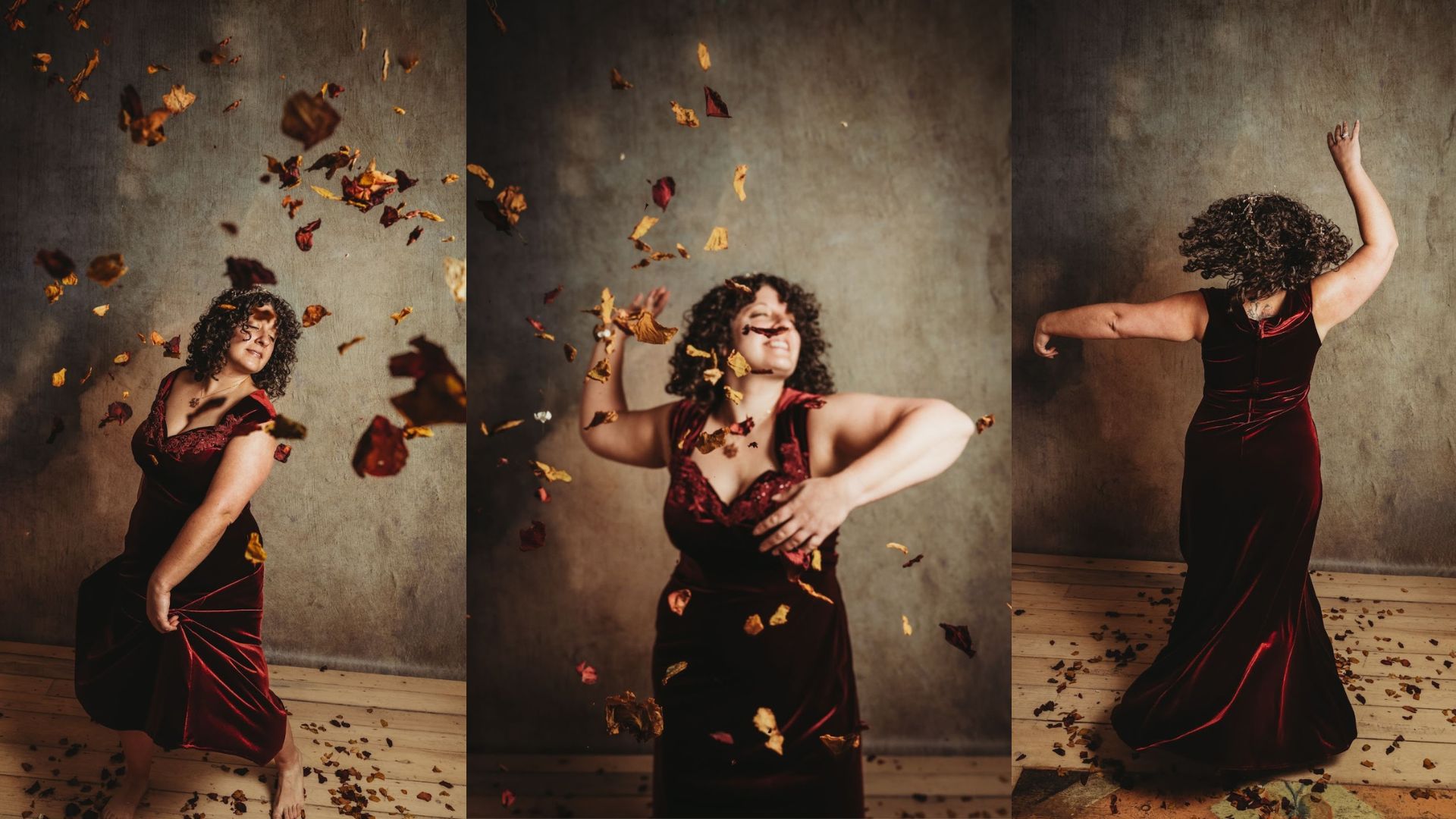
Photo credit: Amber Leilani Photography

We use cookies!
We use essential cookies to ensure the website's proper operation. Read our Cookie Policy.