Make Your Career as Multifaceted as You are
June 30, 2026
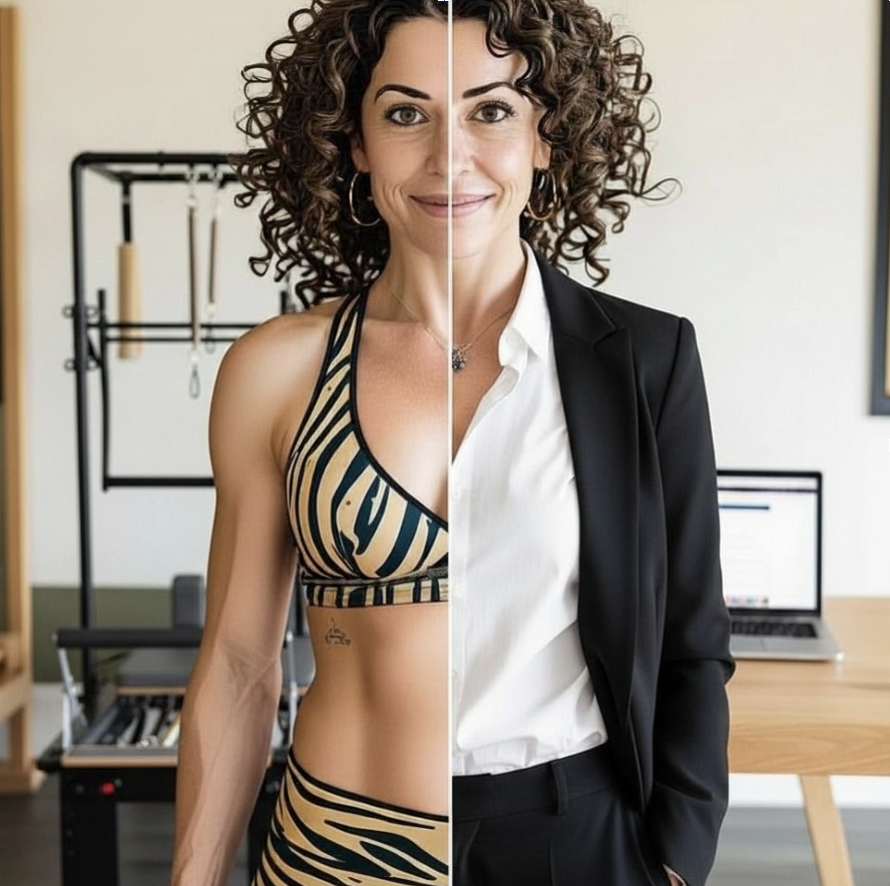
Professional loyalty was an established value throughout my upbringing. My father worked in construction from the time he was 13 years old until he retired. His father before him became a New York City fireman after serving in the Pacific in World War II. His mother joined a legal office at IBM as a secretary and stayed loyal to her department for more than 25 years and it was only failing eyesight that forced her to quit. When she hit the quarter-of-a-century milestone, she selected a gift from a special catalogue for long-time employees. True to her flashy nature which I loved to bits, and her sense of humor at having been unlucky in love throughout her adult life, she picked a gold ring stacked with diamonds and engraved with the department’s name on the inside. “It was my best and longest relationship,” she said. My grandparents on my mom’s side were much the same – both working as public school teachers in the arts. But like so many other elder millennials, the promise of a single career path has never suited me.
The Crash-and-Burn Cycle
Throughout my life, I’ve had a tendency to throw myself into things with all my might until I crashed. As a teenager, I would agree to audition for any show thrown at me and say yes to all the things. Then I’d hit a wall, usually in the form of a virus, and lie in bed for a week. Burnout is what it would be called now but that word wasn’t in my vocabulary at the time.The same was true in my professional life. I discovered that I could push myself to show up for 60-70 hour workweeks until my body protested. The phenomenon frustrated me because I am a driven, high-achieving woman and it felt like the other people in my sphere of influence were consistently managing a workload I couldn’t sustain for long. I would crash every few months and call in sick just to lie in bed and stare at the ceiling. My body could tell when I had ventured into too-deep waters long before I could.
Physical hurdles to a desk-based life
Since chronic low back pain started when I was a teenager, it has been uncomfortable to sit for more than a short period for as long as I can remember. Movies, long car journeys, and family gatherings – I always found myself looking for excuses to get up and move around. When I was young I didn’t really understand it. My routine was so full of activities, it was easy to avoid being still for long. Then, in my 20s, I suffered a disc herniation and sitting at a desk became absolutely impossible. I had a standing desk before it was cool: I propped my computer keyboard and monitor on reams of printer paper to avoid sitting. An inversion table was the only thing that helped me reduce the sense of compression in my back and hips at the end of each day. Even now, years after the disc has healed, I always use a donut pillow if sitting for more than 30 minutes.
Struggling to stay interested
Like most new grads with a working class upbringing, I didn’t know what to expect in a desk job. All I cared about was covering my bills and–most especially–getting on track with student loan repayment. But I quickly learned that it was difficult for me to sustain focus on the same task for a long period. After 6 months or so, I would always get bored and start looking for something new to do – either in the form of a new project or a new job entirely. This is why management consulting turned out to be such a good fit for me. Even though I was employed by the same company, I got to step into different roles and work with a new team at least a few times per year. I’ve since realized that I’m probably neurodivergent, so the need for constant novelty may not resonate with most, but it’s been a defining theme in my career path.
The Big Jump: Becoming a Pilates teacher
The first advantage to learning to teach Pilates was the ability to avoid sitting for long. This broke down a bit when I started owning a studio and having to handle my own admin, but even with that I can often do it standing or at least in short bursts. Every 50 minutes, I get to interact with a new human being with unique goals and challenges. My brain thrives on the constant critical thinking and problem solving that’s inherent in supporting people’s bodies through pain and illness.
However, with the shift to Pilates came some new challenges. While sustained focus isn’t required, this job does demand a physical stamina I haven’t had to employ before. It gives me a renewed sense of appreciation for the decades my father spent working with his hands. In my case, it’s usually my feet and my voice that take the brunt of the drain.
After this, it’s my energy stores that I’m challenged with. I am an empath to the max, which is essential to the environment of inclusion and safety that is at the core of my studio’s mission. But soaking up the emotions of everyone around me can deplete me quickly. I have found that 3-4 hours is my threshold for back-to-back teaching and then I need to do something in solitude that allows my emotional energy battery to recharge. But how can I keep a solo studio profitable unless I stack my client appointments all day long?
I guess the most obvious disadvantage of my career switch to Pilates is that it’s financially risky. No matter how magnificent of a teacher I am, my business model means that my potential earnings per hour will never match what it was as a management consultant, even 10 years ago. And that assumes a completely packed schedule all year long, which is not how this industry works. With school calendars and holidays and the ebb and flow of prosperity, demand for Pilates–like any other fitness service–is anything but constant. I have to be prepared for sudden dips in income at any moment, whereas unexpected changes in consulting services typically come with at least 30 days’ notice for contracting purposes.
Learning how to juggle – and liking it
In 2018, the answer sort of happened organically. While I was working up to about 20 hours per week teaching Pilates, I got a call from a friend of a friend who owned a boutique consulting firm and was looking for a part-time resource. As it happened, the exact skillset she needed—organizational change management—was my consulting specialty. Luckily, the project demands never rose above 20 hours per week, and I managed to juggle part-time work alongside teaching through the volatile COVID years when in-person fitness took a huge hit. Keeping my client demands manageable, I kept one foot in consulting even through getting my first studio established in Boston in 2022.
Taking on a new commercial lease with the launch of my studio was, in a word, terrifying. I kept telling myself that once the studio got busy enough that I had a financial foundation I would quit consulting. I worried that knowing I could fall back on reliable income was a safety blanket that would ultimately stifle the chance for my studio to thrive. Surely a person is meant to have just one career, one professional focus?! Every role model I had as a child had done this.
At first, having two sets of obligations was too difficult. Consulting clients were unforgiving in their deadlines, but I couldn’t reschedule paying Pilates customers and expect to grow my business. Luckily, I was able to adjust the nature of my consulting obligations over time, and I went from being a member of the project team to a freelance advisor, providing transformation guidance and strategic coaching for a wide range of roles. I became accountable for internal successes only without direct client-facing interactions. This allowed me to make the demands on my time predictable and minimize the amount of unstructured work I had to account for in-between Pilates clients.
Splitting my focus between two professions that rely on vastly different skillsets can at times lead to a feeling of whiplash. I’ve experimented with different schedules to try and get the right balance of variability and energy recovery without an excess of task switching. It’s taken almost 4 years to find a setup for me that works. I find I do best with a half day in each role so that I have sufficient time to get into flow state without hitting fatigue too soon. I am still learning to manage expectations–both mine and those of others–so that I avoid the trap of just working two full time jobs at the same time. For someone like me who’s never been great at boundaries, this is an ongoing challenge.
The benefits are worth it in the long run, though, because by allowing both sides of my professional life to flourish, here’s what I’ve gained.
- Novelty: As my focus gets refreshed with shifting priorities, so does my passion
- Stability: Combining the work that fills my cup with other work that pays my bills
- Reliable Empathy: I can focus on each client with enough space in between to restore my empathic energy.
- Pacing: Changing from tasks for one business to the other builds intentional breaks into my day and week that help me pause for self-care.
- Flexibility: More space in my schedule means the freedom to rearrange with minimal disruption when my health fluctuates.
Let’s normalize a dual-focused career
I don’t care if you dedicate 1 hour or 20 to your passion project. Labelling it a side hustle diminishes the significance of what you’re doing – both in terms of the impact you’re making in the world and the energy it demands of you. The notion that there can only be one professional focus is outdated. It complies with a mindset where financial returns is the only measuring stick that matters when it comes to any professional endeavour. But your many talents and your limited time have the potential to benefit your community greatly. I’m constantly fighting the kneejerk reaction to explain myself to people who assume having two businesses means that I’m just ‘dabbling” rather than achieving distinct success in vastly different areas of expertise. For me, and I think for other entrepreneurs with chronic conditions, getting the right balance of task requirements across a spectrum of mental focus, human interaction and time, is the ultimate goal. And pursuing a multi-faceted professional life is a unique and rewarding way to do that.
You’re not selling out because you want peace of mind
Like most people in health and wellness, human impact is my North star. I do this work because being of service to individuals in pain gives me a sense of purpose unparalleled to what I felt anywhere in my corporate life. So when I tell my peers in the wellbeing industry that I also help coach businesses through organizational change, the response ranges from confusion to outrage. How could you?! I thought you were ONE OF US?! Because being of service to anyone somehow came to mean being of service to everyone, all of the time.
I used to fall prey to that guilt trap but the all-or-nothing mentality is the makings of a burnout life. You can be passionate about helping others achieve their goals, but also put your needs first. You can leverage the marketability of your skills to create the space you need elsewhere for the work you feel most called to do that earns less. And you can be an expert voice in your industry even if you only leverage those skills part of the time. The 40-hour workweek threshold is arbitrary and most ambitious chronic bosses I know are so efficient that they outpace the average worker anyway. Whenever you doubt yourself, think of all the people out there who have built massive financial empires without any real skills. Think of the gym bros and frat boys who’ve catapulted each other into success with mediocre grades and bare minimum effort and then spent most of their time sitting around congratulating each other for it. With focused, intentional effort, you can actually change the world. Follow your passions, carve out your niche, and we all win.