Can Courage Become Toxic?
October 12, 2026
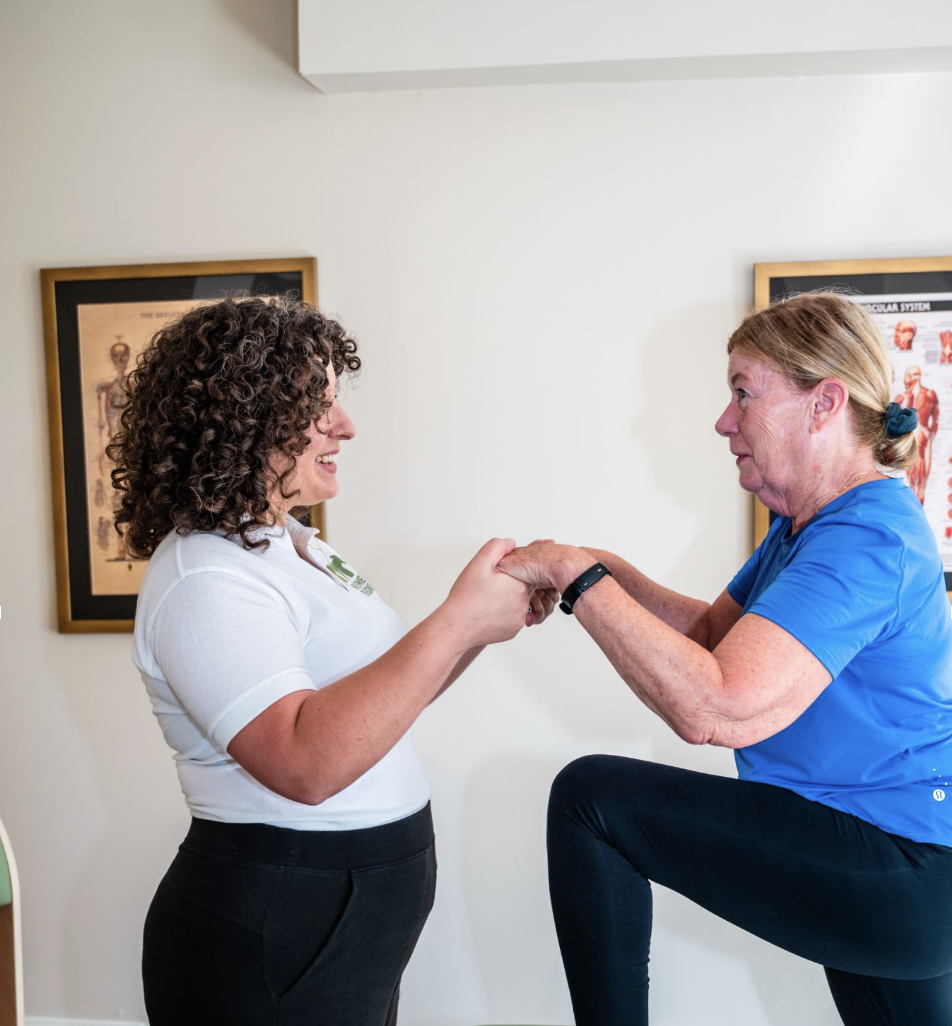
The biggest limiter when getting active with chronic pain is fear: anticipating discomfort, feeling uncertain of your abilities, and dreading the judgment of others. These things come up time and again in the form of fear of movement. According to a literature review published in Applied Sciences, anywhere from 42 to 93 percent of individuals with a chronic condition experience kinesiophobia. The resulting lack of physical activity and increased risk of functional decline can lead to reduced quality of life and independence over time. Nobody wants that, obviously. But crossing the gap between feeling afraid of a thing and doing a thing requires a special ingredient: courage.
Courage is the antidote to fear. Not because fear is eliminated but because it loses the power to hold you back. Courage is showing up even when you’re scared, even when you don’t know what the outcome will be. Kinesiophobia will be conquered when you fear pain or injury during exercise but keep showing up to move anyway. Of course, doing so requires a supportive, inclusive environment where you can do so authentically.
Revealing Capacity through Courage
Courage creates an opportunity to nurture confidence in your body. When you try a hard thing and you realize that you’re capable, the question that follows is: What else can I do? This is why Glennon Doyle’s rallying cry of “You can do hard things” in her book Untamed hit us so deeply. I think we were all sick of the feminine success archetype of a businesswoman effortlessly prevailing in career and relationships without a hair or button or emotion out of place. F*ck that.
We rise by trying, and trying is messy. Trying doesn’t guarantee anything. If you only tried things that you knew you’d succeed at that wouldn’t require any courage at all. But I know already that you step into each new challenge with your fist in the air saying, “Damnit, here we go!” Why do I know that? Because you’re living in modern society with a chronic condition: you have no other choice.
So there’s no doubt in my mind that you have what it takes to face (and prevail over) new challenges. When it comes to movement, do that enough times and kinesiophobia will be eviscerated. Because your mind cannot carry both the story that pain due to movement is a threat and also the evidence of your success in moving your body at the same time. The cognitive dissonance of “I can”/“I can’t” will force the mind to choose. And continuing to show up forces its hand. This is the power of courage when moving your body with chronic pain. Consistency in doing the thing renders the fear irrelevant and the pain often slips into the background without fanfare–at least for a time.
Courage is foundational to my teaching – so much so that I even have a workshop for other teachers who are interested in helping their own clients with chronic pain achieve their movement potential and Courage is in the title. The whole point is to design manageable challenges that incrementally build a client’s confidence, bringing them closer to their ultimate movement “why”. I would stake my reputation on courage being an absolutely essential ingredient for getting active with chronic pain. I even have the word tattooed on my arm (literally)!
And yet, as with every good thing, we can take it too far. Courage can in fact, become toxic when it takes on one of these traits.
Courage becomes performative.
If social media has taught us anything, it’s that we prefer to be seen as the version of ourselves we wish we were rather than our true selves. When on the inside you feel messy, vulnerable and angry, courage feels like a thing you can put on to shield yourself from being seen as less desirable. You feel uncomfortable in your body in a way that other people around you will probably never understand. This is a burden you’ve had to carry for a long time. And so doing exercising or participating in activities even when you’re scared or uncomfortable can almost be like an act of rebellion; a way to protect yourself from judgment.
Other people see your courage as honorable, as demonstrating resilience that elevates your social standing. And as a result, you become attached to striving to be brave just as surely as chasing after any other unhealthy defining life goal, like getting skinny or gaining social media followers. Being seen as courageous can become as important if not more important than your own movement progress and so it misses the mark entirely.
Courage means doing more
Progress is not linear. It feels so clichéd to say this–itt’s on t-shirts and pillowcases everywhere, but seriously. In life generally, but even more so with a chronic condition, the unpredictability of progress is next-level. Today’s experience is absolutely no indication of what tomorrow’s will be. And it’s unlikely that any day will ever be exactly as you expected.
That fundamental lack of control is itself a fear-provoking thing. It’s probably the most destabilizing experience a human being can feel. It can be tempting to think that with enough courage, it’s possible to just wrestle your symptoms into submission. Maybe the experience you want can be forced through sheer will. Courage can start getting mixed up with achievement, as if it’s a pathway to doing more with less. But courage is defined by your arrival to a task – not by the results.
Courage makes things easier
When sh*t gets hard, we reach for mental fortitude, hoping that it will be enough to overcome discomfort. And for a short time, maybe it is. But intention is no substitute for capacity. Courage is potent, that’s for sure. Most of the time, you probably don’t even realize how much courage you’re displaying. It takes courage every time you commit to that social engagement or family trip or work presentation or new puppy. Maybe you fear being unable to show up fully, letting people down, or being seen as a failure. The same is true when you’re in a conversation with your body and trying to exercise.
Courage can help with getting over the initial panic of walking through the door and it might even get you through the first few minutes, but if your muscles or your immune system or your heart rate aren’t up to the challenge, courage can’t do anything but soften the blow. Courage doesn’t make anything about moving your body easier except the part where you choose to do it in the first place. You still have to be willing to listen to what your body has to say about the request. You still have to be prepared to accept the outcome so that you can gather the courage to show up all over again.
Tempering Courage with Acceptance
There is honor in striving for courage, of course there is. But if you confuse the courage to do the thing with knowing if the thing is actually a good idea, you run the risk of steamrolling your own needs and safety in the process. I’ll bet there’s been people in your life who made you feel like less, who clung to the theory that getting you to “try harder” would lead to a better outcome. Maybe you were made to feel that your inability to do something was an inconvenience or a burden. These wolves in sheep’s clothing may have even used the word courage in the process, conveying the message that the arrival of your symptoms was somehow a choice to acquiesce.
Movement avoidance is not the answer when it comes to fear of pain. Not only because avoiding movement will limit your mobility in the long run, but also because the presence of kinesiophobia is itself associated with greater pain intensity. The only path forward is to have the courage to acknowledge the fear and move anyway.
Coupling courage with acceptance is the winning formula for getting active in the face of chronic pain. This means choosing to challenge yourself in order to sustain the movement vocabulary that is important to your daily life, while also being ready to accept the ways in which that experience may vary day to day. Courage alone may get you to show up when you’re feeling uncertain. Courage is the foundation upon which hope for a different future can be built. Acceptance will make it possible to hold on to that hope in the face of frustration and disappointment. Courage is the flint that sparks a flame for change. Acceptance will offer compassion for your body regardless of what it is capable of on any given day.
Finding serenity in balance
You cannot will yourself into feeling a certain way. Your symptoms are not a reflection of how much bravery or strength you’re able to muster. There is some spectrum of experience that hinges on mindset, certainly. And your ability to conjure up courage will undoubtedly enhance your life. But, ultimately, we are not the supreme masters of our bodies–or even our lives–that we want to be. If we were, qualifying for the Olympics or summiting Everest wouldn’t be the awe-inspiring and rare achievements we know them to be. Because so much is left to chance, we get to experience surprise and delight and relief in our daily lives. This is the sweet side of the bitter coin that is lack of control.
Even an elite athlete knows when it’s time to stop pushing. No amount of courage can overcome poor weather conditions or viral infection or any number of other factors that may get in the way of the most experienced and gifted movers. Courage and acceptance are like the cosmic forces of yin and yang, a proportional but opposite push-pull dynamic that together brings balance to our existence. Next time you feel compelled to judge your relationship with movement, ask yourself if you’ve brought some toxic courage into the mix. And start by finding your way back to equilibrium between the hopeful spark of courage and the compassionate calm of acceptance.