The Future in the Moment: Future-Proofing Your Urgent Healthcare Visit
August 24, 2026
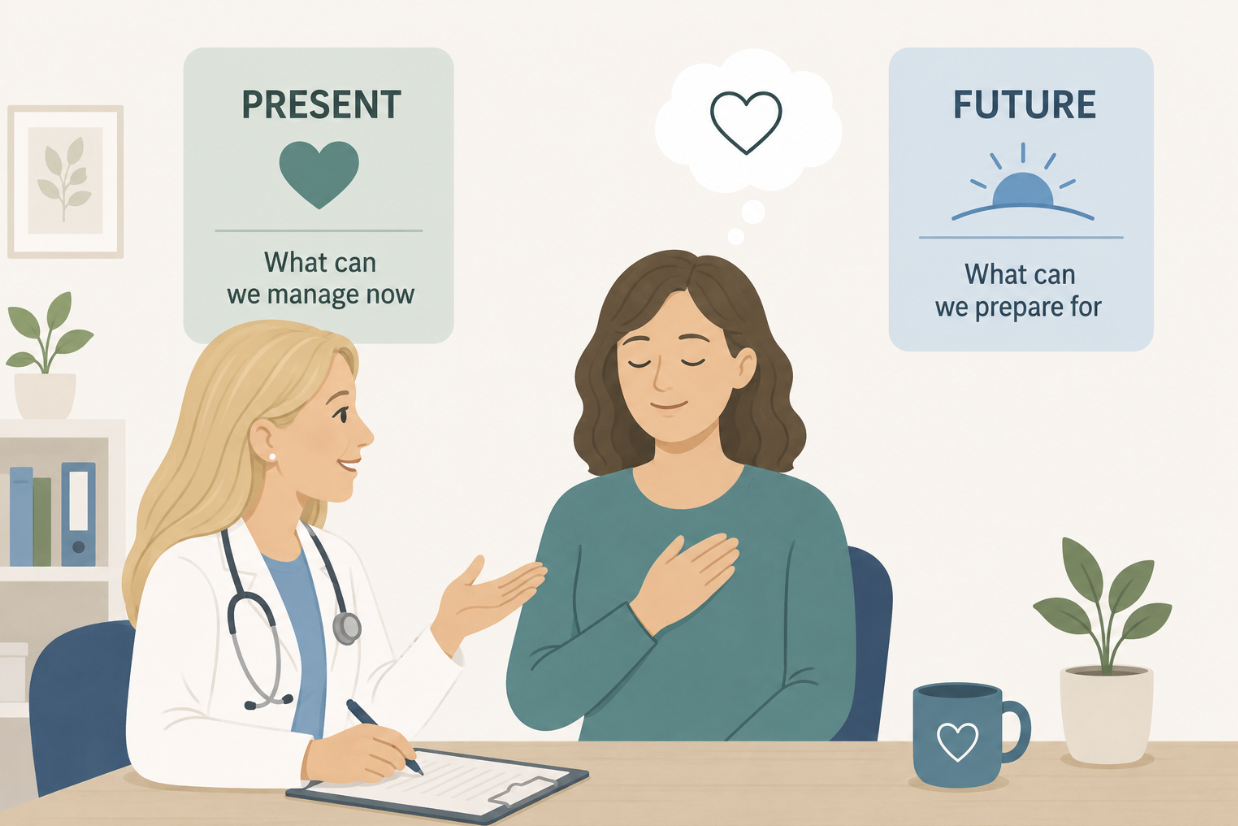
Years ago, I participated in a leadership exercise based on the 5 Voices Framework. This program helps people understand their communication styles and relational needs—and those of their team members. The goal is simple: help teams communicate better.
One insight from that exercise was immediate and clear: I am a future thinker.
Future thinkers naturally look ahead. We think about what’s next and often worry about the long-term impact of the issue in front of us. Our brains jump to questions like, “Where does this go?” What should I prepare for five steps down the line? What does this mean months or years from now? What could go wrong, and how do we prepare?
This realization surprised me even more, as I began to notice that many frustrations with important people in my life stemmed from their being present thinkers. Present thinkers focus on the problem right in front of them. They solve what needs to be solved now, take the next step, and move forward without dwelling on future implications.
Neither approach is better. Different ways of thinking within a team create balance, which in turn leads to stronger decisions and better team outcomes. But understanding the difference helped explain my frustration when conversations stayed focused only on the immediate issue. It also clarified why I’ve been told, “You’re overthinking this.” At the same time, I’m sure my future-focused thinking can be just as frustrating to present thinkers.
With this in mind, I began reflecting on my healthcare relationships—both with my long-term care team and with the providers I see in unexpected, urgent situations.
The doctors, like my cardiology team, who manage my chronic condition take a future-focused approach. They evaluate my current situation, consider my medical history, and plan for my future health to keep my condition stable over time.
But sometimes, care must happen in the moment. This could mean urgent care visits on weekends or when I can’t get a primary care appointment. In those cases, I work with new providers focused on solving the immediate problem. After the visit, though, the responsibility shifts back to me—to figure out the follow-up and make sure the short-term solution doesn’t negatively affect my long-term health.
For patients with chronic conditions, this contrast raises an important question: How do we manage unexpected present problems while still protecting our future health? Thinking about long-term health encourages a sense of responsibility and proactive engagement in our care decisions.
Thinking Long-Term… Even When I’m Short on Patience
Last summer, on a weekend, I was experiencing incredible back pain. I found a local orthopedic urgent care center that wasn’t affiliated with my usual healthcare facility. As expected, the on-call physician evaluated my condition and sought an immediate solution. Among his immediate strategies, he suggested medication to manage both the swelling and pain. I wasn’t sure if I could take either with my heart condition, and since it was Saturday, I couldn’t call my cardiologist to check.
Then he suggested that I see a specialist as soon as possible.
Again, my future-thinking brain kicked in. In pain and a very bad mood, I asked with a lot of snark and sass, “So you want me to call my cardiologist about XYZ medication on Monday—then what? Do I call back, explain to the receptionist, hope they find you, and probably speak with someone else who doesn’t know the details, who will tell me they don’t manage me, so they can’t help me, and I’m screwed? How is this supposed to work?”
I continued with my spicy mood – probably even rolled my eyes. I mentioned that getting in with a specialist as a new patient might take up to six months. I felt a bit daunted thinking about the likely Monday routine—calling multiple offices, explaining the situation, and being told I needed a referral from my primary care doctor. Trying to clarify that I had gone to urgent care, not my primary, seemed unlikely to help. You know the drill: the patient tries to piece together a solution in a system that doesn’t fit, only to end up back at square one.
As always, the burden often falls on the patient to manage the situation.
The doctor patiently listened to my rant and understood. He suggested a few simple solutions. Thankfully, he was patient with me and my sass. He said he could prescribe the medication to my pharmacy. “If your cardiologist says no,” he told me, “just cancel it.” He went further and referred me to someone in his network who could see me the following week, avoiding a six-month wait for a new patient appointment.
The Unexpected Lesson from an Urgent Care Visit
Reflecting on this appointment, I saw my future thinking emerging in the present. Frustration with a quickly fading pain tolerance drove it to extremes.
This experience taught me that I can act as a future thinker in the present moment, even in unexpected situations, with some preparation. The key is to do it a little more graciously—and ideally come prepared with a few options so the doctor in front of me can help plan the next steps in my care.
Future Thinking… With Slightly Better Manners
Here are some strategies I’ve put together that may help in these situations—ways to bring a little future thinking into unexpected, present-moment care. It’s also a way for me to be prepared, so I’m less likely to give another spicy rant.
Ask for Alternative Options
If you’re prescribed a medication that might conflict with your existing conditions or medications, ask questions that help the doctor think through alternative options, such as, ‘Could this interfere with my [specific condition]?’ or ‘Are there safer alternatives?’
Examples:
- “Is there an option that’s less likely to interfere with my heart (or insert your condition) medications?” Note: Your pharmacist can also help with this.
- “What would you prescribe for someone with cardiac [insert your condition] concerns?”
- “Is there a lower-dose or short-term option that could stabilize my immediate condition until my specialist reviews it?”
- “Could you prescribe it to the pharmacy, but have me hold off on starting it until I confirm with my cardiologist?”
Ask about a Bridge Strategy
Explore low-risk or temporary approaches to alleviate your symptoms until you can speak with your specialist.
Examples:
- “Is there a temporary treatment that could work until a specialist weighs in?”
- “If I wait until Monday to confirm with my cardiologist [insert your specialist], what’s the safest plan until then?”
- “Is there something that could manage the inflammation or pain for a few days until I confirm with my cardiologist?”
- “What would you recommend just to get me safely through the weekend?”
Plan the Follow-Up Before You Leave
Before you leave the urgent care situation, clarify the next steps so you’re not left trying to piece things together later.
- “Are there symptoms that should make a return to the urgent care?”
- “What symptoms would prompt an ER visit?”
Future-Proofing Your Healthcare Visit
That’s how future thinking can improve urgent care outcomes: asking forward-looking questions bridges today’s decisions with tomorrow’s wellbeing. This isn’t about questioning doctors unnecessarily— it’s about making sure today’s actions support future health. When patients bring a future perspective to healthcare visits, care becomes more effective and patient needs stay prioritized.
Because the most empowering question a patient can ask isn’t just about today’s problem.
It’s simply: What’s the plan from here?