From Paralyzed Overnight to Powerhouse: How Chronic Illness Can Sharpen Your Leadership
April 11, 2026
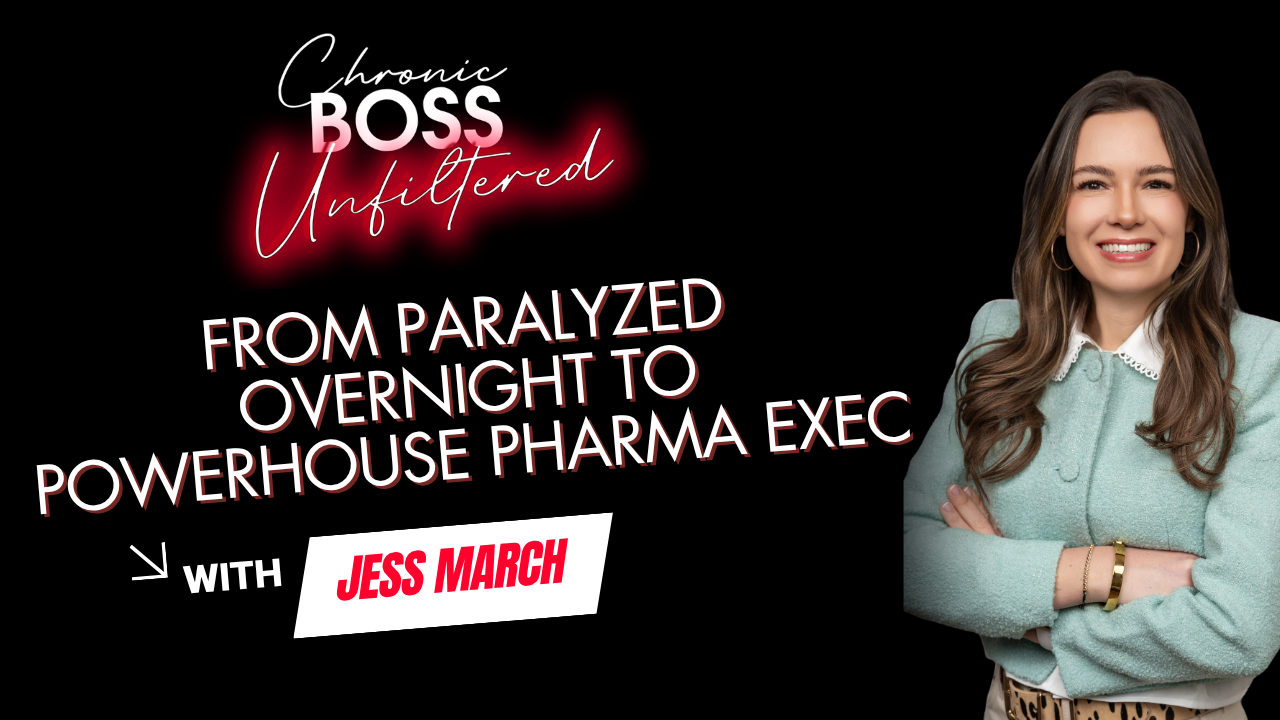
I keep coming back to this moment Jess shared.
She woke up one morning at 29 years old and couldn’t move.
One day she was building her career, training for endurance events, living a fast-paced life. The next, her body forced everything to stop. That kind of moment doesn’t just disrupt your plans. It rewrites your entire understanding of what your life and career could look like.
And yet, what struck me most was not what she lost. It was what became clear.
Chronic illness does not take away your ambition. It refines it. It forces clarity, strengthens your leadership, and helps you focus on what actually matters.
What happens to your ambition after a diagnosis?
It does not disappear. It evolves.
There is a narrative that chronic illness makes you scale back your goals or settle for less. That has not been my experience, and it was not Jess’s either.
Chronic illness forces you to get honest, fast. You start asking better questions.
- What actually matters to me?
- Where do I want to spend my limited energy?
- What kind of impact do I want to make?
When your energy is not unlimited, you stop wasting it on things that do not align. That level of clarity is something many people spend decades trying to find.
Jess did not lose her ambition. She refined it.
Can chronic illness actually make you a better leader?
Yes. Your lived experience gives you insight that cannot be taught.
Jess built a 25 year career in pharmaceutical and rare disease spaces. What set her apart was not just her professional expertise. It was her experience as a patient.
She was not guessing what patients needed. She understood it.
At Chronic Boss, we talk about this as your “secret sauce.” It is the combination of your professional skills and the superpowers you build through living with a chronic condition.
Those superpowers often include:
- Adaptability in unpredictable situations
- Deep empathy and emotional intelligence
- Problem solving under pressure
- Resilience when things do not go as planned
These are not soft skills. These are leadership skills.
Why does lived experience matter in healthcare and beyond?
Because decisions are better when the people affected by them are in the room.
Jess was very clear about this. Patients should not be brought in after decisions are made. They should be part of the decision-making process from the beginning.
This applies beyond healthcare too.
If you are navigating a chronic condition while building a career, you see gaps that others do not. You understand systems in a different way. You ask different questions.
That perspective is not a liability. It is an advantage.
How do you navigate disclosure at work with a chronic illness?
There is no one right answer. It is a personal decision.
Jess approached disclosure with intention, and that is the key takeaway. Sharing your diagnosis at work can feel vulnerable, but it can also create connection and open the door to support.
What matters most is that you own your narrative.
When you decide how your story is told, you shift from reacting to situations to leading them.
If you are considering disclosure, here are a few things to reflect on:
- What feels safe and aligned for you right now?
- What support or accommodations would actually help you succeed?
- How do you want your experience to be understood?
There is no pressure to share everything. There is power in choosing what you share and how you share it.
What does energy management have to do with leadership?
Everything.
Managing your energy is not about doing less. It is about doing what matters most, consistently.
Jess talked openly about planning her energy, thinking ahead, and making intentional decisions about how she shows up at work and at home.
This is something many high achievers struggle with, especially those of us used to pushing through.
But sustainable success does not come from pushing harder. It comes from being strategic.
Energy management looks like:
- Prioritizing high impact work
- Building in recovery time before you hit burnout
- Making decisions based on long-term sustainability, not short-term pressure
That is not weakness. That is leadership.
Do boundaries make you less ambitious?
No. They make your ambition sustainable.
There is a belief that if you set boundaries, you are somehow less committed or less driven. Jess completely reframed that.
Boundaries are how you protect your health so you can keep showing up for your goals.
Without them, burnout is inevitable.
With them, you create a path where your ambition and your health can coexist.
What does real patient leadership look like?
It looks like being in the room where decisions are made.
Not as a token voice. Not as an afterthought. As a leader.
Jess’s career is a powerful example of what happens when patients are embedded into leadership roles. The work becomes more thoughtful, more effective, and more human.
And again, this extends beyond healthcare.
Your experience gives you a perspective that can shape better workplaces, better products, and better systems.
FAQ
Can I still build a successful career after a chronic illness diagnosis?
Yes. Many people find that their careers become more aligned and meaningful after diagnosis because they are forced to prioritize what truly matters.
Should I disclose my chronic illness at work?
It depends. Disclosure is a personal decision. It can create connection and support, but it should always be based on what feels right and safe for you.
How can chronic illness improve leadership skills?
Living with a chronic condition often builds resilience, adaptability, empathy, and strategic thinking. These are all critical leadership qualities.
What is energy management and why is it important?
Energy management is the practice of intentionally planning how you use your physical and mental energy. It helps prevent burnout and supports long-term success.
How do I stay ambitious while protecting my health?
By setting boundaries, prioritizing high impact work, and aligning your goals with your capacity. Ambition and health are not mutually exclusive.
Final Thoughts and Your Next Step
If you are sitting with the question, “Can I still be ambitious after my diagnosis?” I want you to hear this clearly.
You are not starting from behind. You are starting from a different place, one that comes with perspective, strength, and clarity that many people never develop.
Take a moment and reflect:
What has your experience taught you that others might not see?
That insight might be the very thing that sets you apart.
And if this resonated with you, share it with another Chronic Boss who needs the reminder.
Connect with Jess March
LinkedIn: / jessica-march
Chronic Boss Hub: https://chronicboss.com/jessica-march/