How to Get Unstuck and Get Started: Tips from an Elder for Our Overthinkers
April 18, 2026
Take Some Advice From My Mom
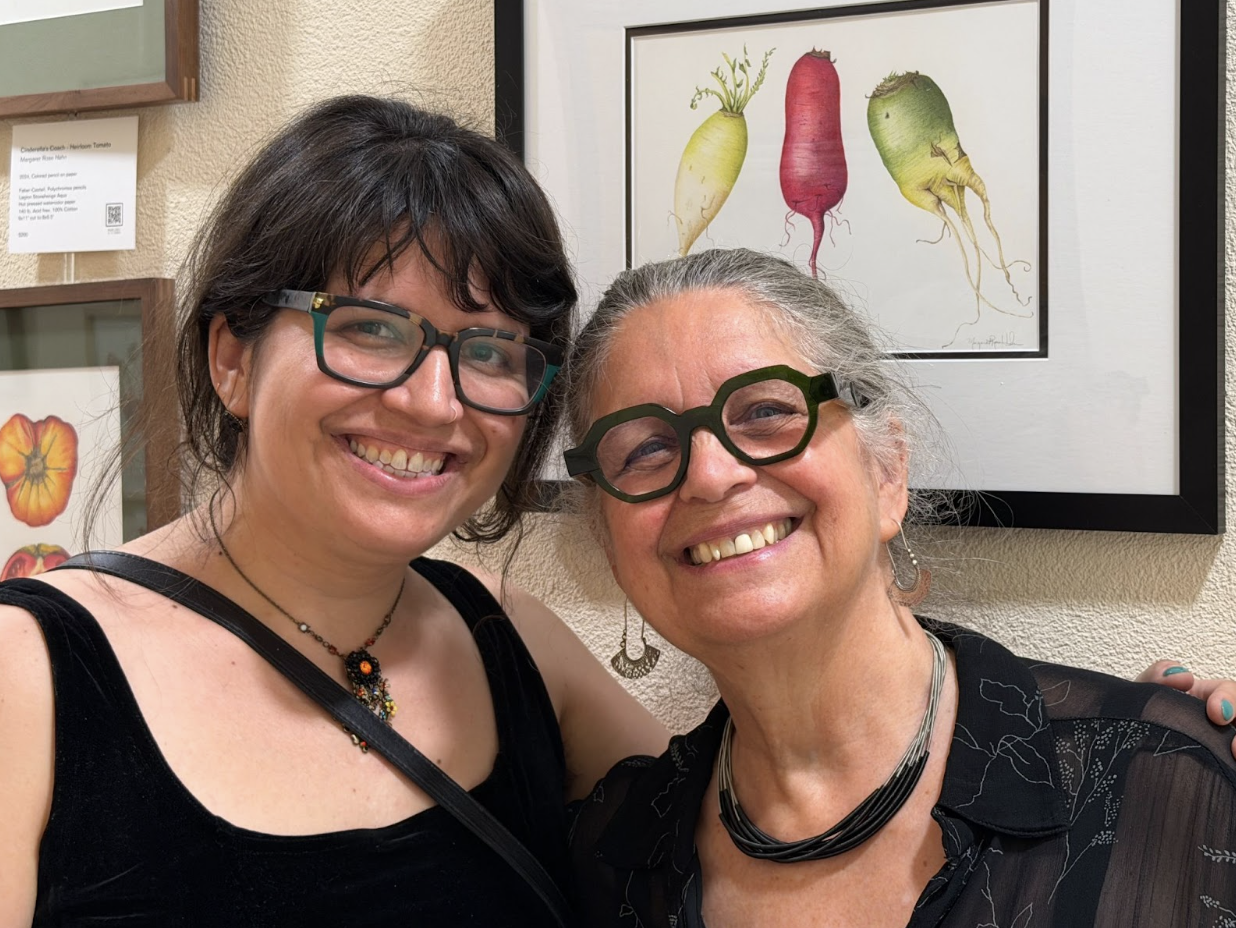
Last week was a celebration of my Mother’s art exhibit. A self-taught artist, she began learning how to draw at the age of 67. In 2020, when the pandemic hit, she dove into the endeavor during the early years of retirement and became particularly taken by botanical subjects. An avid gardener with a diligent eye honed through years of stage managing, the painstaking detail of tiny petals and veiny leaves suited her.
My Mom enrolled me in countless art classes throughout my adolescence. I was not like most people — avid and unencumbered artists in their youth who then “grew out of it” or were, more likely, not encouraged to foster their creative side. What I didn’t realize was that my Mom was funneling encouragement and dollars into my creative interests because she herself desired to draw.
Here are three lessons that I’ve learned from her, ten years out of retirement and living very well, that apply to any of our chronic bosses taking the leap into something new and exciting.
It’s Never Too Late to Start
My Mom is a beautiful counterexample to a deeply held belief that I suspect I share with others. Particularly when it comes to creative endeavors, many think that these are talents you must hone as a child or ones that you are blessed with, rather than ones you develop. Although I suspect there’s value to learning a skill when you’re young, there’s certainly evidence for that when it comes to learning a language, we shouldn’t feel limited to that time frame. Creativity is something we all have access to. If my Mom can pick up an artist’s pencil and paper in her 60s, you can launch that new offering or study up on that new skill, whatever age you are!
I have gone through so much of life feeling that I am behind, that others are way ahead of me, and that there’s no way to catch up. Some level of prudence is important when you’re deciding between sticking to something you’re good at versus derailing your life to chase that new shiny thing. However, constantly selling yourself short by feeling that “you should have done something sooner and now it’s too late” is a self-defeating attitude. It’s easy to feel that way, especially with chronic illness since we often face many life path interruptions for surgery or a flare that not everyone encounters. Don’t let it hold you back.
Practice Makes Progress
One thing I admire most about watching my Mom is that even though she has strong perfectionist qualities, she did not give up when her first drawings were short of what she aspired to achieve. I am lucky to have collected many of her pieces over the years, and it’s astounding to see her first smudgier tries at graphite pencil to her finely-detailed multi-color masterpieces that she regularly churns out. She did this by just keeping on doing the thing. She always has a project going, sometimes more than one if she’s feeling like she’s stuck on the first one (which she often feels and calls me in for visual advice). I love her dearly, but her stuff really wasn’t all that good to begin with. Now it’s breathtaking. It’s because she kept on going.
Famed podcaster Ira Glass of “This American Life” talks about this phenomenon that he calls “The Gap.” Budding artists’ tastes are often much better than the work that they’re able to produce. This is totally normal, but there can be a lot of self-judgment and despair for the artist if they have unrealistic expectations. This applied to entrepreneurship as well. We are often expected to build the plane while we are flying it—there is no way that flight will be anything close to smooth. We learn each time we try something new, hopefully finding work we enjoy and can repeat. Eventually we’ll have proposal templates, clear offerings, and appropriate pricing packages for your clients, but at the beginning, it can be a whirlwind.
Not Everything You Do Needs to Make Money
This tip applies especially for creatives, but if it’s financially possible, I’d recommend it to others as well. My mom didn’t set out on her drawing journey to make money. She started because she loved the process of creating. She wanted to make artwork for herself and maybe gift it to family members or friends. Modern Renaissance-man-turned-YouTuber (and formerly Kevin Gnapoor from the movie Mean Girls), Rajiv Surendra, has an excellent video on the topic called “Monetizing Your Hobbies, Advice.” He says that you can’t get really good at a craft if your goal is to make money. The only way is by freeing yourself of the pressure to monetize in order to reach a high level of skill. Ironically, the only way to get to a place where you can sell your work to make money is to reach that high level first.
A nice way to think about this is through the lens of a Japanese concept called “ikigai” or “reason for being.” There is some philosophy adjacent to “ikigai,” like being happy by always being busy, which I don’t think is helpful for chronic bosses or anyone trying to live a balanced life. However, I do love the visualization of four sections of the Ikigai chart that break down into “what you love,” “what the world needs,” “what you’re good at,” and “what you can get paid for.” Ideally, your business falls somewhere in the center, but I think it’s also important to make time for “what you love” even if it’s not what you can get paid for. Try the exercise that this Medium blogger recommends to explore these concepts further.