How to Reframe Rejection: Joyfully rejecting our ableist world right back

Two Layoffs, One Pandemic, and a System Not Built for Mental Health
My studio, With Care Creative, happened once I personally came to terms with some pretty painful rejections. Confession: in the years 2021 and 2022, I was laid off from two jobs back-to-back. In our current economy, onlookers might not even blink an eye at some resume gaps, or odd job hopping. This is especially true in my hometown and current city, Washington D.C., after the slew of federal lay-offs this past year. But fresh out of grad school (part 1) and full of naive hope (part 1,000), I was absolutely devastated by these setbacks.
There’s many ways I could narrate these life-altering layoffs in the middle of the pandemic, and they stuck with me emotionally before I could really seize control of the narrative. The first lay-off was from a mental health startup and happened when I was in the middle of a mental health meltdown. The second lay-off was from a fast-paced and demanding design agency and happened soon after I asked for accommodations. There are a lot of other reasons I was laid off (I didn’t really know how to work with people at the time, I became a union steward after three months on the job, I wasn’t as good of a designer as I am now), but it’s a more important truth that the working world is not made with mental health in mind.
What Burnout Looked Like in the Mirror
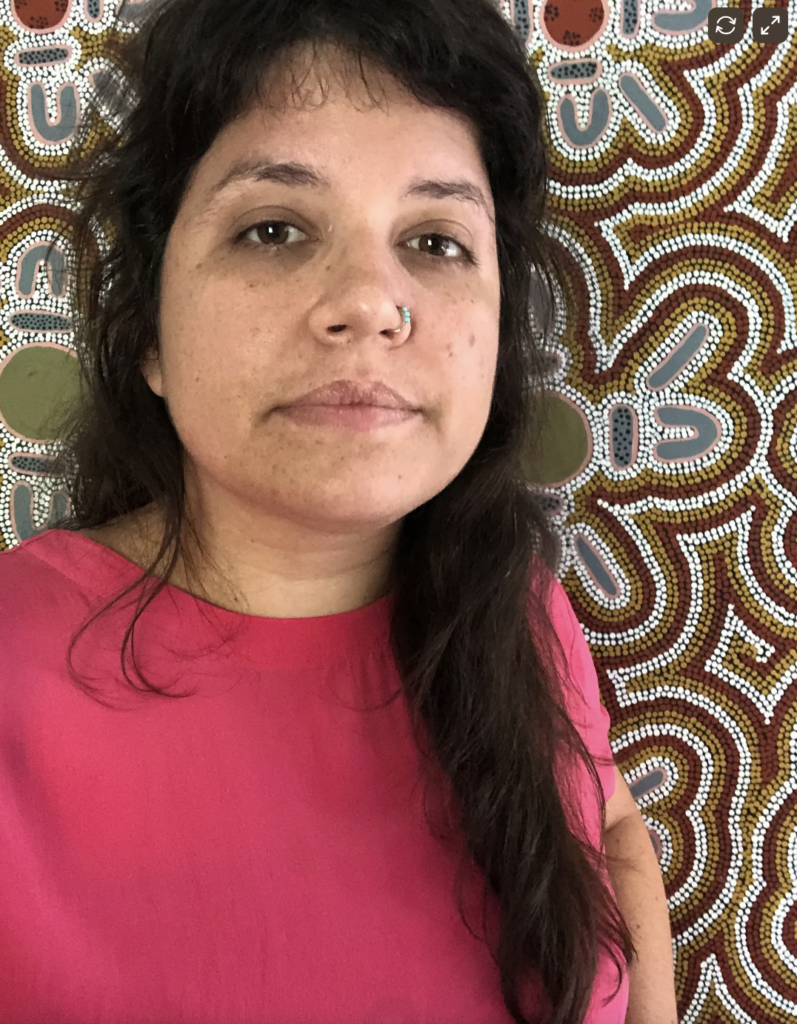
This is a picture of me in late 2022. I appear tired and resigned. My eyes are vacant and searching for something. I looked like that all the time for a while. The photo was taken in front of a large piece of indigenous art purchased by my grandfather, a collector of many beautiful paintings. My family had enough money to float me while I struggled, largely because of my grandfather’s business success as an entrepreneur. My parents and I have benefitted from his inheritance, but most people who get laid off twice during a global pandemic are not so lucky.
I had never really failed so fabulously at anything before. My life was pretty blessed save for a slew of diagnoses and my struggles with relationships. Other than that, I was a great student, I had succeeded (more or less) in my first career of choice, and no one really saw this coming. It took a lot of therapy, and coaching, and twelve steps, to see these lay-offs for what they were; a big sign that fast-paced, demanding jobs were not for me and that was okay.
What a Performance Improvement Plan Taught Me About Running My Own Business
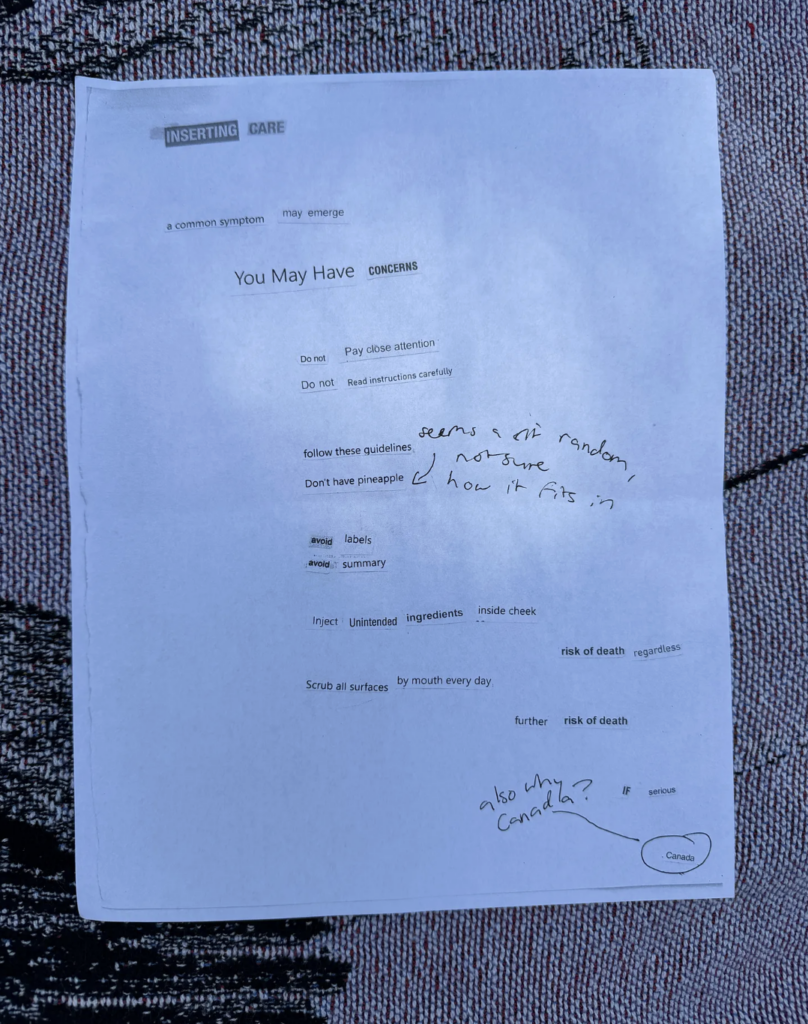
It’s 2026, and I don’t look like that despondent picture from 2022 anymore. This past year, I wrote over a dozen poems and received feedback on them. The responses I’ve gotten on these poems have been mostly positive, giving me a sense that it was worth writing more of them, but I have received negative feedback too. That’s been valuable as well. I do believe that failure is an important part of the creative process and it’s made me reflect a lot on this creative practice that many of us have been exposed to called “critique.” In “The Artist’s Way,” a methodology meant to get creatives out of their own head, Julia Cameron writes that blocked artists’ mindsets are often shaped by the many critical voices they’ve heard throughout the years. The method encourages artists to play and risk failure regularly.
The method encourages artists to play and risk failure regularly.
After entering the freelance and entrepreneurial space post-design-agency, it surprised me, and often frustrated me, when I only received positive feedback or didn’t have a detailed senior design eye watching me. In the process of my second layoff’s Performance Improvement Plan, every tiny thing I created was scrutinized, torn apart, and documented. Even though that was one of the most excruciating creative times of my life, I subconsciously sought that level of perfectionism and dismissed anything less as “not up to design standards.” I was frustrated by my subsequent boss because she was not a micro-manager. In actuality, she was moving projects forward and meanwhile, keeping her team’s spirits uplifted. As an entrepreneur, that’s been a far more valuable lesson than perfectionism.